

The future of dentistry is here—and it’s stimulated by artificial intelligence (AI) and mechanization. From disease and situation preparation to patient communications and working workflows, technology is changing how dental practices operate. Leading this conversion are Dental Service Organizations (DSOs), which are adopting ai in dentistry to improve patient care, boost efficiency, and improve appropriateness.
Here’s through DSOs are at the forefront of merging AI and automation into up-to-date dental care—and what that means for the future of the enterprise.
The Rise of AI and Automation in Dentistry
AI refers to machines or software that can mimic human wit, while automation involves utilizing technology to perform tasks with the slightest human intervention. In dentistry, this can take many forms, including:
- AI-driven analyst using digital image
- Automated appointment arranging and reminders
- Chatbots for patient askings
- Predictive analytics for situation planning
- Robotic help in surgical procedures.
How DSOs Are Leading the AI Revolution
1. Standardizing AI-Powered Diagnostics
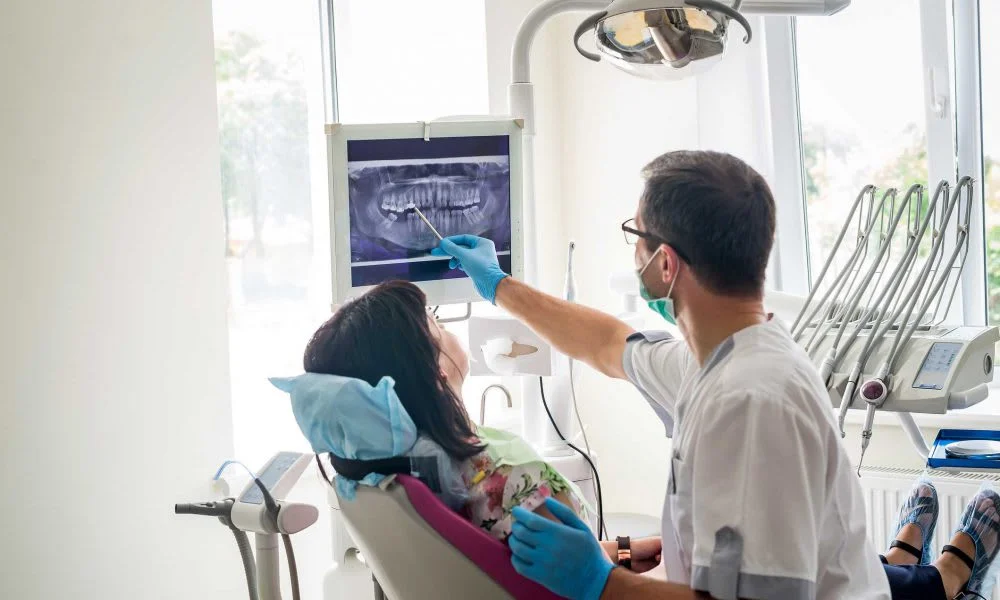
DSOs are using AI to resolve X-rays and 3D scans exactly and efficiently. Software programs powered by machine intelligence can detect cavities, bone loss, and added conditions accompanying greater thickness than traditional procedures. This standardization reduces demonstrative variability across providers and locations, reconstructing patient outcomes.
2. Streamlining Administrative Workflows
One important advantage of AI and mechanization is the reduction in manual, behind administrative tasks. DSOs are achieving:
- Automated insurance proof
- AI-driven billing and systematize
- Smart scheduling orders that optimize assignment times, establish treatment type, and provider availability
This not only cuts operational costs but also allows dental crews to focus more on patient care.
AI in Patient Engagement and Communication
DSOs are leveraging AI to improve patient engagement at all touchpoints. Examples include:
- AI chatbots that handle FAQs, schedule assignments, and send follow-up ideas
- Automated reminder schemes that reduce absenteeism
- Personalized patient education finishes that adapt content established treatment past or demographics
These improvements support better patient relationships while lowering staff duties and responsibilities.
Predictive Analytics for Practice Growth
Using AI-driven data analytics, DSOs can foresee trends in patient behavior, assignment volume, and situation acceptance. This helps accompany:
- Staffing optimization
- Strategic marketing decisions
- Early invasion for patients at risk of spoken health issues
Smaller practices can not have access to this level of analytics, but DSOs can apply insights across their entire network for maximum adeptness and scalability.
Challenges and Considerations
While the benefits are clear, DSOs must also navigate:
- Data privacy and security stubbornness with HIPAA
- Staff preparation and acceptance of new sciences
- Upfront investment costs for AI finishes and infrastructure
However, accompanying careful implementation, the enduring rewards often override the risks.
Conclusion
AI and computerization are no longer optional—they are essential elements of up-to-date dentistry. DSOs are superior the charge by implementing these electronic structure-expansive, propulsive innovation, abilities, and patient satisfaction.